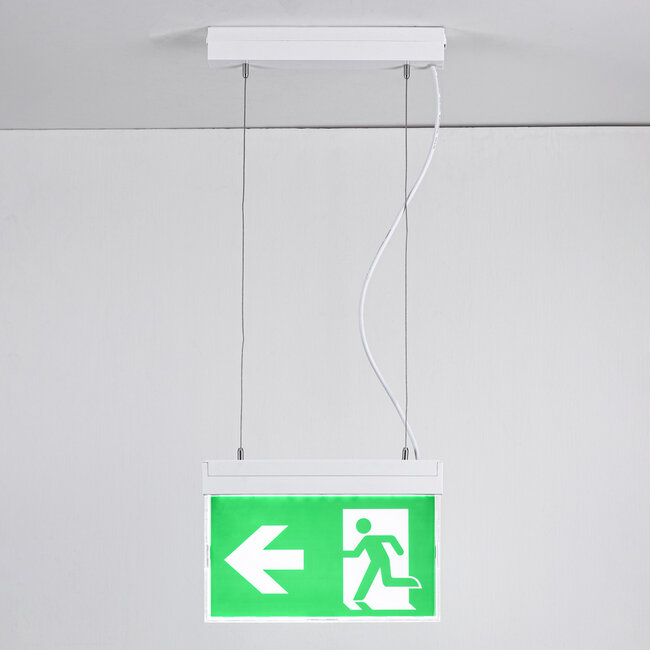
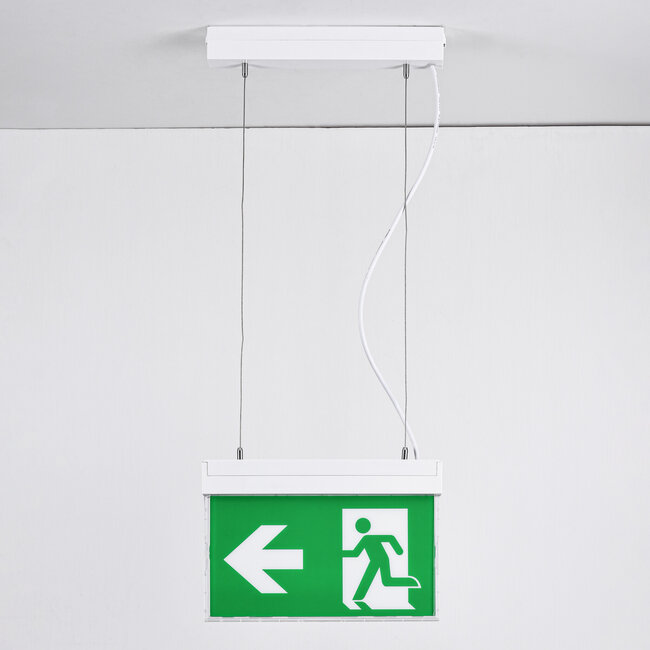
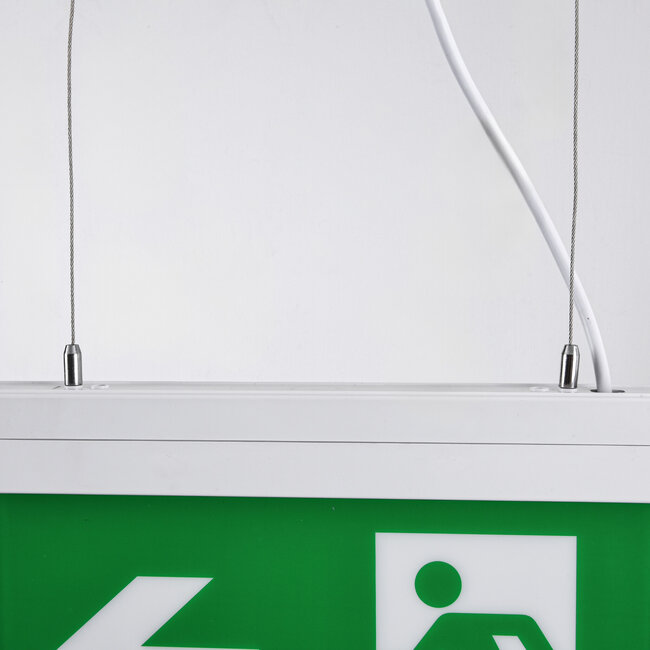
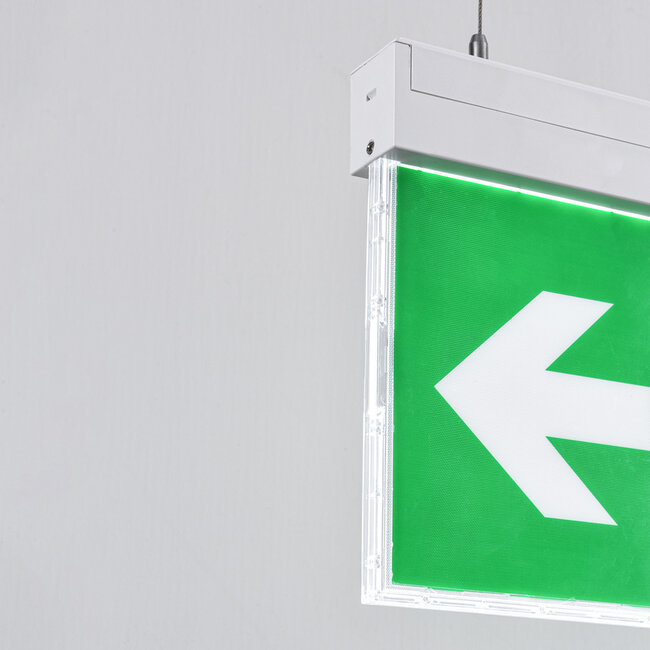
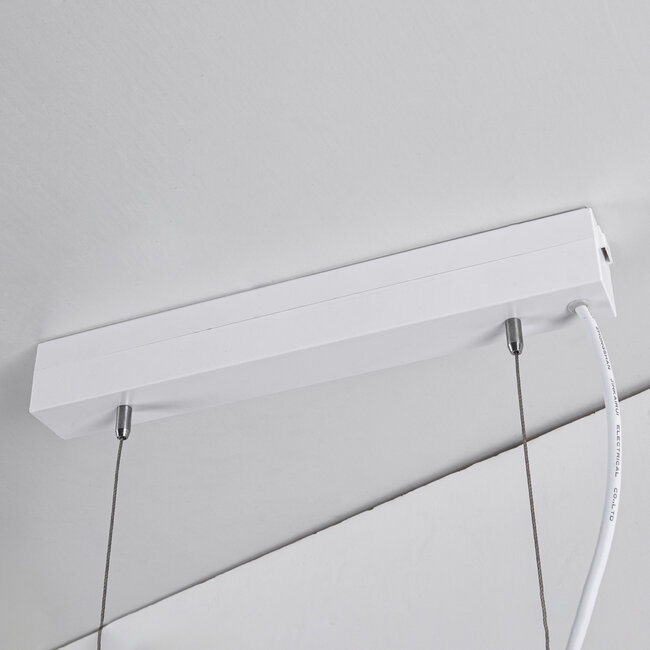
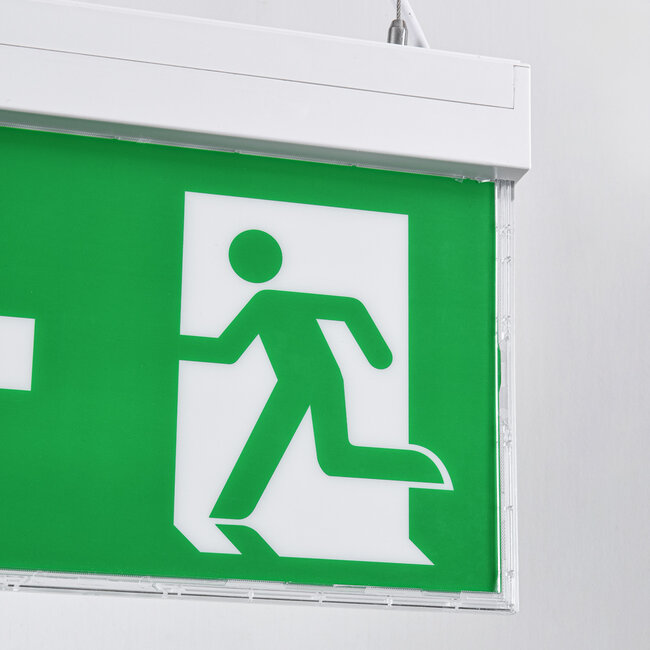
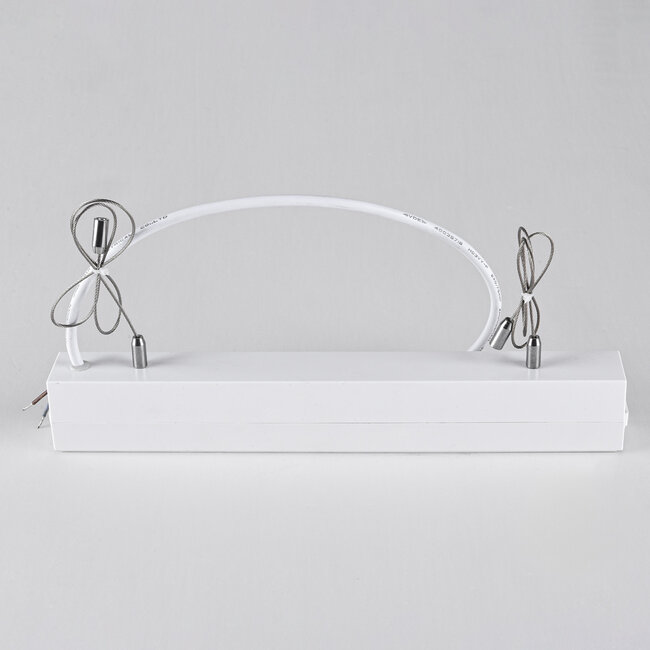
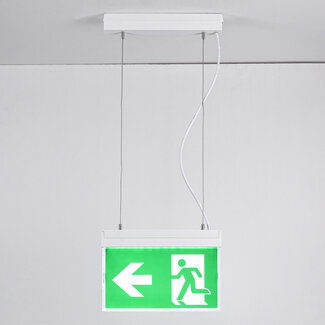
Emergency lighting with pendant provides essential lighting in emergencies and can be mounted on high ceilings, depending on the specific needs of the space. The lighting has a colour temperature of 6000K, which provides bright, cool white light and optimal visibility during an emergency, enabling safe evacuation. The fixture has 16 SMD LEDs. This fixture comes with four pictograms (PVC) that have the following arrow directions: left, right, up and down. The pictograms can be placed on both sides of the fixture. This emergency lighting with 50 cm steel wire is ideal for mounting on high ceilings.
This emergency lighting can be mounted in various ways. You can choose from a suspension set for easy mounting on high ceilings, a recessed set for a sleek, integrated installation in a wall or ceiling, or a sideways wall mounting set for attachment to walls. Each set offers a practical and safe solution for the effective placement of emergency lighting in various environments.
The emergency lighting also has a self-test function. A self-test function means that a luminaire automatically tests itself at pre-programmed times.
After the first 24 hours of charging, a full three-hour endurance test is performed. A self-test is performed on all products with a self-test function and is carried out after the first time the product is switched on. The luminaire is equipped with a single two-colour LED indicator. This indicator is clearly visible for manual inspection and indicates the status of the module. The LED is permanently green or flashes green when conditions are normal. When the LED flashes red, there is a malfunction in the luminaire.
The function tests are generated randomly and take place every 28 days. A function test is a 2-minute test that simulates a power failure and checks the operation of the emergency lighting from the battery power supply. The LED indicator flashes green slowly while the 2-minute function test is in progress. If a fault occurs during a function test, the local indicator light flashes red.
An endurance test simulates a power failure and takes place every 52 weeks. It also checks the operation of the emergency lighting from the battery power supply for the nominal duration of the module. The LED indicator flashes green rapidly while the endurance test is being performed. The battery must be fully charged before an endurance test can be started.
The luminaire can be set to continuous (permanent lighting) or non-continuous (non-permanent lighting). If the luminaire is set to continuous, the light will also be on when there is no power failure. If you set the luminaire to non-continuous, the light will only switch on when the luminaire is no longer receiving power from the mains and will then remain on for three hours on battery power. Three hours is usually sufficient for employees and visitors to leave a building and also falls within the legal standard.
All our emergency lighting models are CE certified and comply with the standards and requirements applicable in Europe. The housing and diffuser are made of high-quality plastic.