
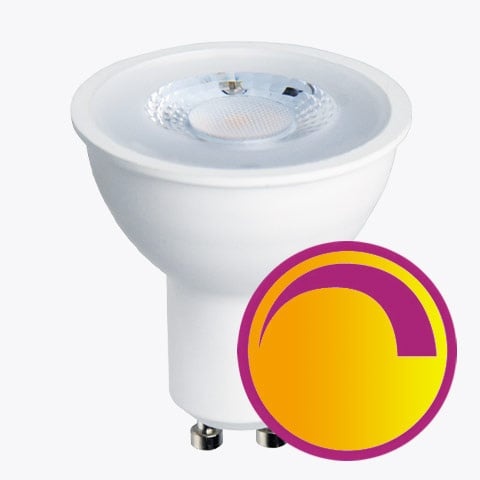
Not just softer, but warmer too
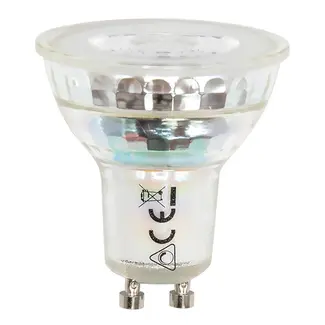
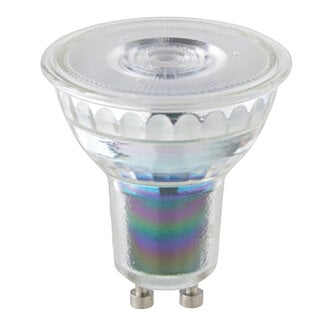
With an ordinary dimmable bulb, the light simply becomes less bright while the colour stays the same. With dim-to-warm, the colour changes as you dim the light: the further you dim it, the warmer and more golden it becomes, from warm white (2700K) to extra warm white (2200K), similar to candlelight. So with this GU10 bulb, you can adjust not only the brightness, but the atmosphere too.
Why does it feel more atmospheric?
An old-fashioned incandescent bulb did this naturally: the further you dimmed it, the redder the filament became. We all know that effect, and it's exactly what we associate with cosiness. LED spotlights don't do this naturally, which is why dimmed light can sometimes feel a little cold. Dim-to-warm brings that effect back, which can make a real difference with spotlights in a living room.
You need a dimmer
Dim-to-warm only works with an external dimmer. You really are dimming the bulb, and that's what makes the colour change with it. For spotlights in the ceiling, a wall dimmer switch is the logical choice. If you'd rather dim without a dimmer, a 3-step dimmable bulb is the better choice. This type of bulb doesn't change colour.
Where do you use them?
In the living room, dining room or bedroom: anywhere you want a cosy atmosphere in the evening and brighter light during the day. In a kitchen or work space, dim-to-warm makes less sense, as cool white light is more practical there. There are dim-to-warm versions for E27 bulbs too.


