

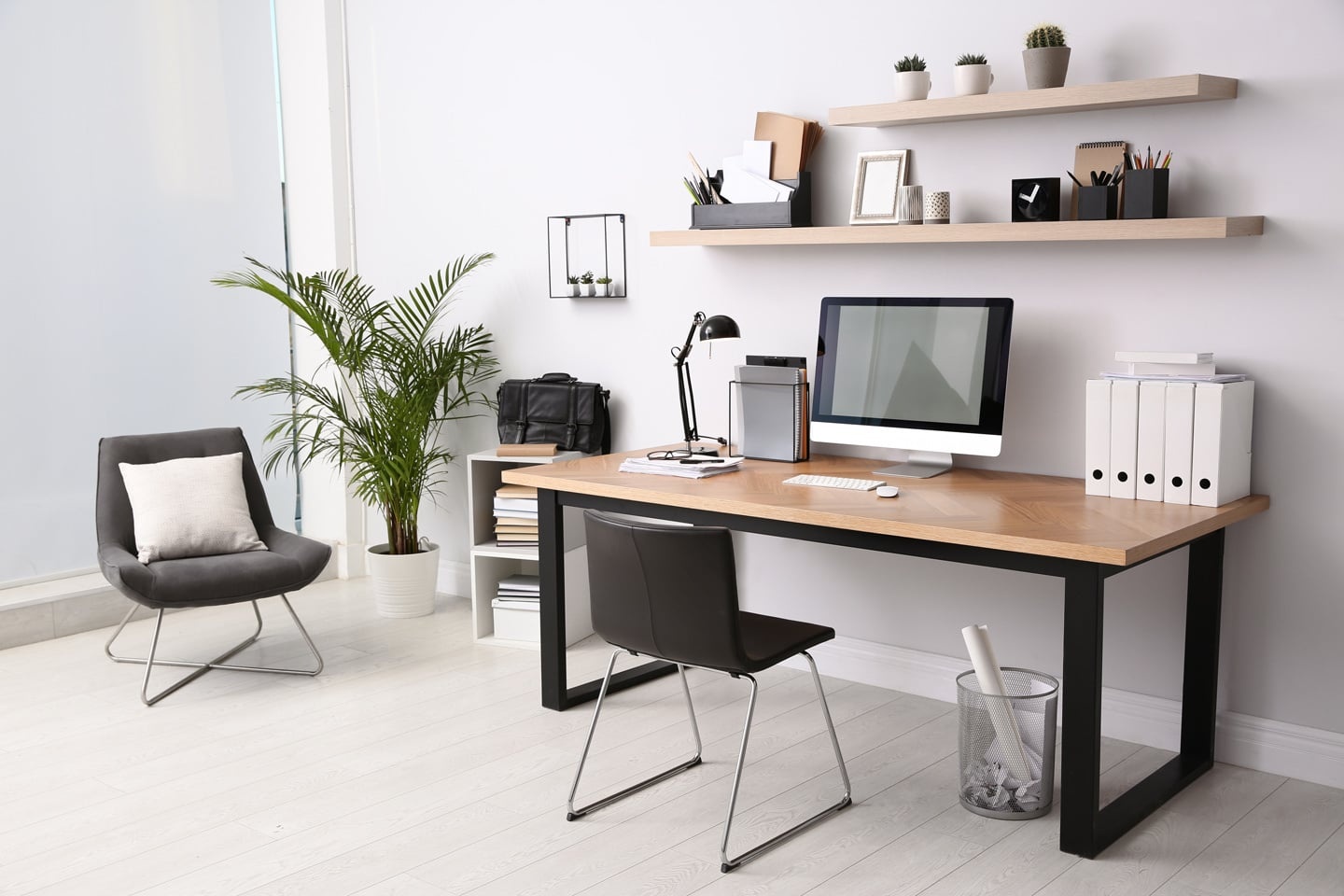
Working and relaxing
A home study needs to work as both an office during the day and part of your home in the evening. Your lighting should suit both. A bright desk lamp on its own can make the room feel harsh in the evening, while relying only on ambient lighting can make it harder to work comfortably. The best solution is to combine different types of lighting that you can switch on and off separately.
Which lights do you need?
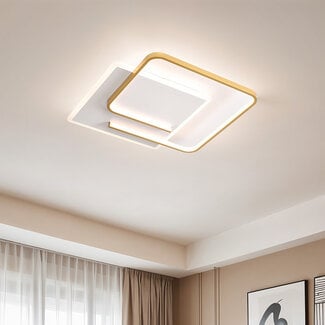
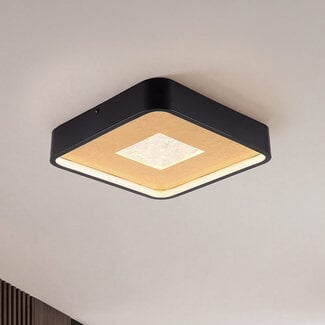
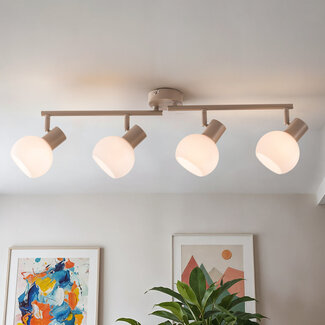
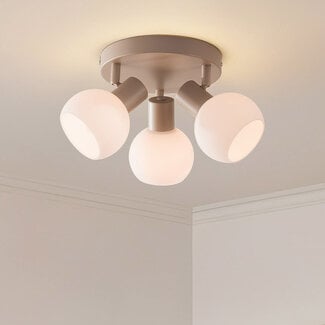
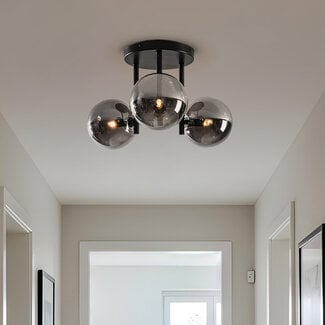
A desk lamp provides focused light for your work area. A ceiling light provides general lighting throughout the room. A floor lamp creates a softer atmosphere when you've finished work, while spotlights can highlight a bookcase or feature wall.
Avoiding shadows and reflections
Position your desk lamp on the opposite side to your writing hand to avoid casting shadows over your work. Think about the position of your screen, too. Lights directly behind or above it can cause reflections, while lighting from the side can help reduce them. If your desk is near a window, make the most of the natural daylight and adjust your lighting as it changes throughout the day.
Choosing the right colour temperature
Cooler white light can help you see details clearly when working, while warm white light creates a more relaxed atmosphere in the evening. A 3-step dimmable bulb or a lamp with an adjustable colour temperature lets you adapt the lighting to suit different activities and times of day.


